
Why Chiropractic Care and Massage Work Better Together
When discomfort involves both stiff joints and tight, guarded muscles, focusing on only one part of the problem may leave part of the picture unaddressed.
That is why chiropractic care and massage therapy can work so well together.
Although each service has its own purpose, both support the musculoskeletal system in different ways.
Massage therapy focuses primarily on the muscles and other soft tissues, while chiropractic care addresses joint mobility, movement, and overall function. When used together as part of an individualized treatment plan, they can provide a more complete approach to helping patients move and feel better.
Different Approaches With A Shared Goal
Muscles and joints constantly work together.
When a joint is not moving as well as it should, the surrounding muscles may tighten or become guarded. Likewise, muscle tension can restrict movement and contribute to discomfort during everyday activities.
Massage therapy uses hands-on techniques to address areas of muscular tension, tenderness, and restriction.
Depending on the patient’s needs, massage may help:
- Reduce muscle tension
- Ease temporary soreness and discomfort
- Promote relaxation
- Support comfortable movement
- Improve a patient’s overall sense of well-being
Research suggests massage therapy may provide short-term benefits for certain types of musculoskeletal pain, although results can vary depending on the condition and the patient.
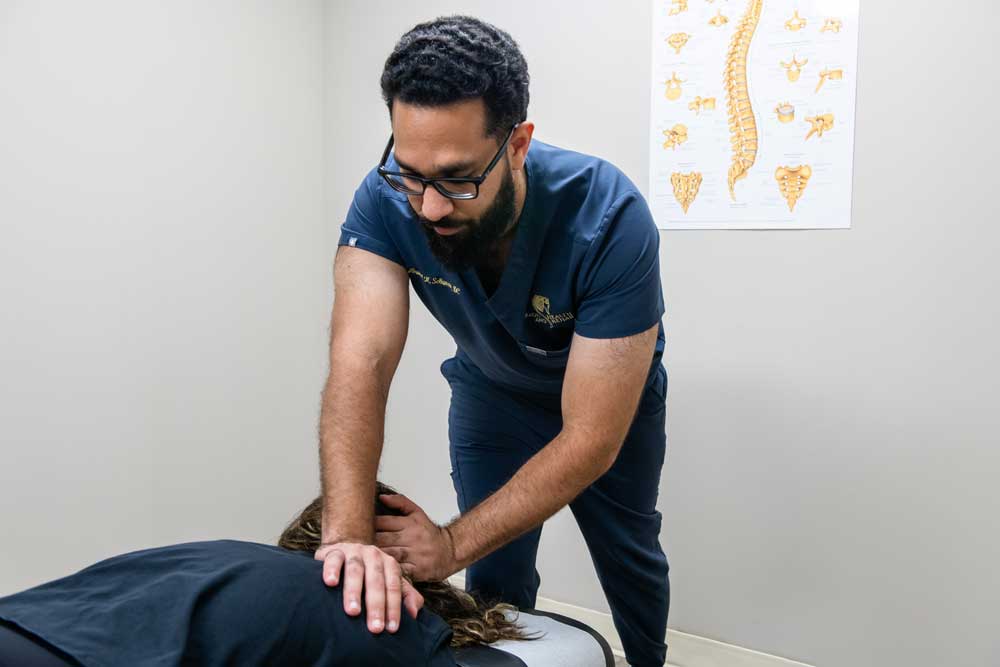
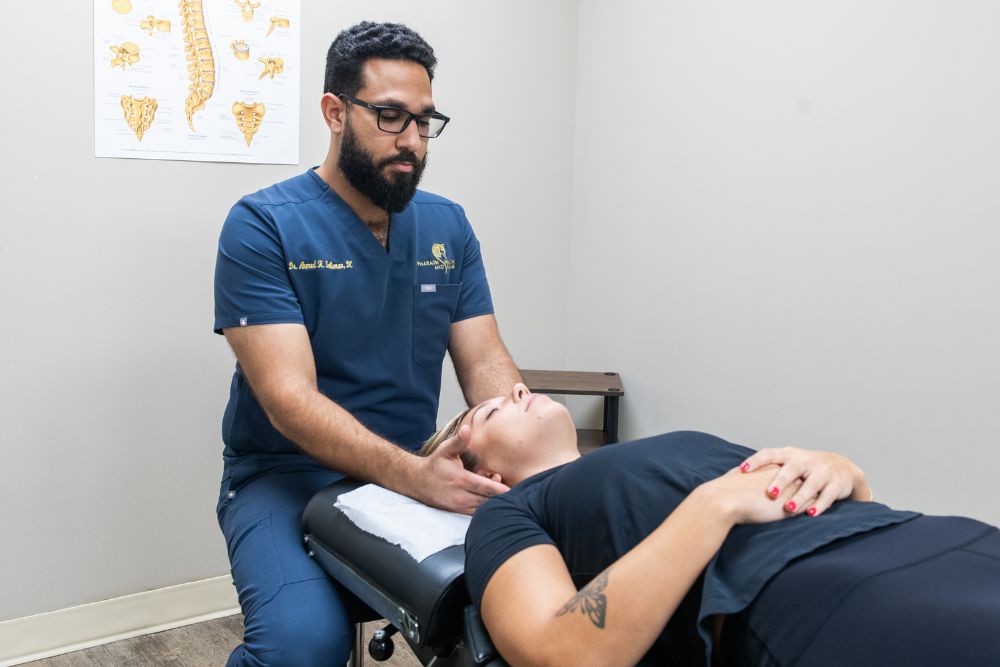
Chiropractic care focuses more directly on joint motion, mobility, and movement patterns. Treatment may include chiropractic adjustments, mobilization, therapeutic exercises, or other services selected according to the patient’s condition and goals.
Evidence-based guidelines recognize massage, spinal manipulation, exercise, and other noninvasive, holistic approaches as potential options for managing certain musculoskeletal conditions.
Neither service replaces the other. Instead, they address different components of the same interconnected system.
Why We Often Recommend Massage Before Chiropractic Treatment
When appropriate, we often recommend scheduling a massage before seeing the doctor for treatment.
Massage may help calm muscle tension and reduce guarding, leaving the body feeling more relaxed and comfortable.
This can make it easier for the doctor to assess movement and provide treatment afterward. Patients may also find that treatment feels more comfortable when the surrounding muscles are less tense.
However, massage is not a required first step for every chiropractic appointment, and it does not guarantee a particular outcome. Our recommendations are always based on the patient’s current condition, comfort, and individual treatment plan.
Convenient Care in One Location
Because we offer massage therapy in-house, patients do not have to coordinate care between two separate offices.
When recommended, a massage and chiropractic appointment can be scheduled on the same day so the patient can move directly from one service to the next.
Our massage therapist and chiropractic team can also work toward the same overall goals. This coordinated approach helps ensure that care is based on what the patient needs.
It’s not a one-size-fits-all routine.
What Combined Care Looks Like
Combining massage and chiropractic care does not mean every patient receives the same services, schedule, or treatment plan. Some patients may benefit from pairing the two regularly, while others may only need massage at certain points during their care.
The recommended approach depends on factors such as the patient’s condition, areas of tension, mobility, comfort level, treatment goals, etc. For example, a patient experiencing significant muscular tightness or guarding may benefit from massage before treatment, while another patient may not need massage as frequently.
Our goal is not to add services unnecessarily. It is to determine which combination of care is most appropriate for the individual and adjust the plans as their needs change.
What to Expect When Scheduling Both Services
When massage and chiropractic treatment are scheduled on the same day, the massage typically comes first. The massage therapist works on the areas discussed during scheduling or identified as part of the patient’s treatment plan.
After the massage, the patient transitions to their chiropractic appointment. Because the muscles may feel more relaxed and less guarded, treatment may feel more comfortable.
Both appointments take place in our office, making it easy to coordinate services without traveling to another location or managing separate providers. Our teams can also help patients select the appropriate massage length and schedule enough time for both appointments.
Choosing the Right Massage Length
We offer several massage lengths based on the amount and type of work needed:
- 30-minute massage: A focused session targeting one primary problem area.
- 60-minute massage: Includes work through the neck and back with additional attention given to a specific area of concern.
- 90-minute massage: A full-body session that allows time for more comprehensive care.
Patients do not have to determine the perfect option alone. Our team can help recommend an appointment length based on their concerns, treatment plan, and goals.
More detailed information about our massage options is also available on our dedicated massage therapy page.
When an Evaluation Needs to Come First
Although massage therapy is considered a low-risk service for many people, it may not be appropriate in every situation. Certain injuries, medical conditions, recent procedures, or changes in health may require massage to be modified, postponed, or avoided.
For this reason, new patients seeking the benefits of both services must be evaluated by the doctor before receiving massage therapy. New patients seeking just massage therapy services do not need to be evaluated by the doctor. The massage therapist will do a brief consultation combined with the intake form to determine eligibility for massage therapy.
Contraindications to massage are uncommon, but they can occur.
Patient health and safety will always be our priority.
A More Complete Approach to Care
Massage therapy and chiropractic care do different jobs, but they share an important goal: helping patients feel and move better.
Massage therapy can address tight, guarded, or sensitive muscles, while chiropractic care can focus on joint mobility, movement, and function.
Scheduling a massage before chiropractic treatment may help the body feel more relaxed and better prepared for care, while receiving both services in the same office makes the process simple and convenient.
If you are unsure whether massage therapy, chiropractic care, or a combination of the two is right for you, call us today to schedule your in-person consultation or speak to one of our knowledgeable staff members.