
What To Expect During Your First Chiropractic Visit
Nervous about your first chiropractic visit? Learn what to expect before, during, and after your appointment at our League City Chiropractic office.
Visiting a chiropractor for the first time can feel intimidating, especially when you are not sure what the appointment will involve.
Your first chiropractic visit is about much more than identifying where you’re hurt.
It allows your chiropractor to understand your health history, evaluate how your body is functioning, learn what you want to accomplish, and determine an appropriate path forward.
Before Your Appointment
When you call to schedule your initial appointment, our front office team will collect some basic information to create your patient file. If you plan to use insurance, we will also gather the applicable insurance information.
Once your appointment is scheduled, you will receive a text message (or email) with a link to complete your intake paperwork online.
This includes a new patient form, and the consent forms required for your initial appointment. Completing these forms in advance helps make check-in as smooth as possible.
If you submit an appointment request through our website, our office will contact you to confirm the requested time, collect the same basic information, and send the necessary forms.
We encourage new patients to arrive approximately 15 minutes early in case additional paperwork is needed.
Patients are encouraged to wear loose, comfortable clothing that allows access to the area being evaluated.
Discussing Your Health History and Goals
After check-in, a team member will take you to an examination room and record your vital signs. The chiropractor will then begin the consultation by asking about the injury, symptoms, or area of concern that brought you into the office.
This discussion helps us understand when and how the problem began, where you feel discomfort, and which movements or activities make it better or worse. Your chiropractor may also ask about prior injuries, existing health conditions, previous treatment, and the demands of your job and/or daily routine.
These details matter because recovery does not happen in isolation from everyday life.
A plant worker with back pain may have very different physical demands than someone with back pain who works at an office job. Understanding your daily demands helps our chiropractors evaluate your condition in the context of how you actually live and move.
The conversation will also include your goals for care. Maybe you want to play with your children without pain, get back on the golf course, return to work more comfortably, or resume training for your sport.
Meaningful goals give your treatment plan a clear direction and help us measure progress according to what matters to you.
The Initial Examination
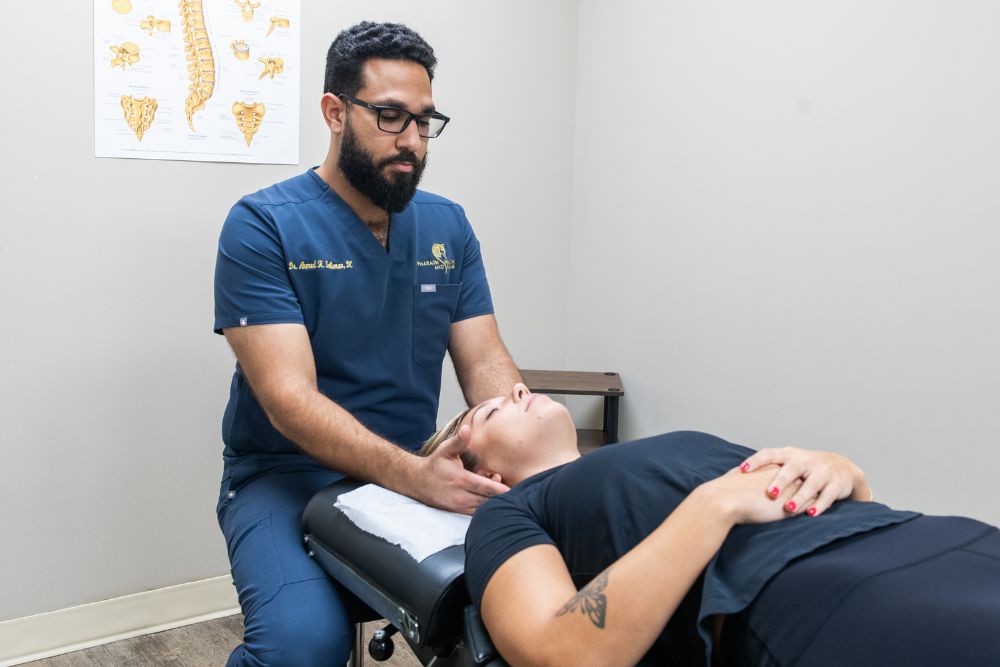
Once the consultation is complete, your doctor will perform an examination based on your symptoms, health history, and area of concern.
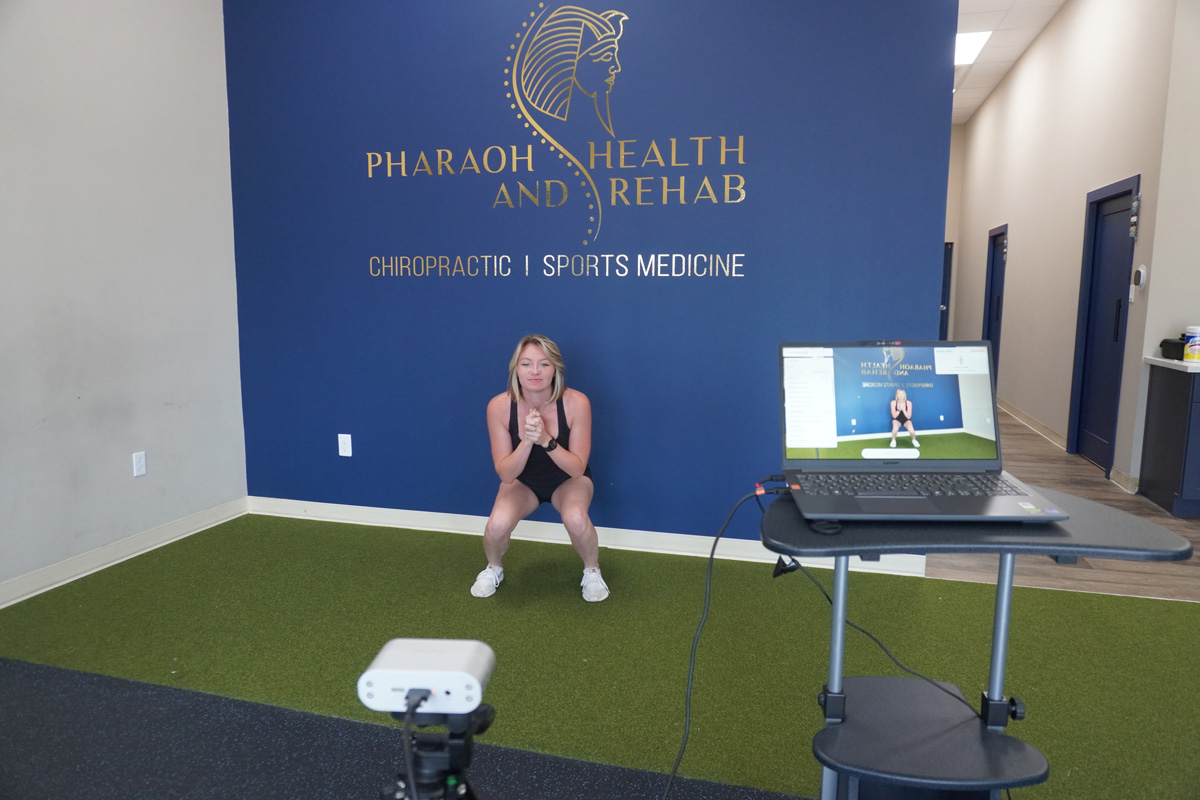
This includes a series of orthopedic tests, neurological tests, motor-function assessments, and range of motion evaluations.
These assessments examine factors such as joint mobility, muscle function, sensation, strength, and how you perform certain movements. These findings also establish a baseline that can be used to monitor progress.
Not every patient will receive the same tests. Someone seeking care after a recent injury may require a different examination than a patient experiencing gradual discomfort from repetitive work or prolonged sitting.
If your history or examination indicates that imaging, additional testing, or another medical evaluation may be necessary, we can refer you to an imaging center or an appropriate specialist.
With your authorization, our office can also contact other doctors involved in your care to request relevant records.
Imaging is not automatically necessary for every patient; the decision depends on the clinical situation and whether the results are likely to affect the next step in care.
Reviewing Your Examination Findings
After the examination, the doctor will review the findings with you.
This is your opportunity to learn what was observed, how those findings may relate to your symptoms or limitations, and whether anything requires further evaluation.
Your doctor will explain the findings in clear language, answer your questions, and discuss factors that may influence your recovery.
If a referral or records request is recommended, the doctor will explain why it may be important before moving forward.
Building a Personalized Treatment Plan
Your health history, examination findings, daily demands, and recovery goals all help guide your personalized treatment plan. The doctor will also consider any precautions or contraindications to determine which treatments can be used safely and appropriately.
A personalized treatment plan might include:
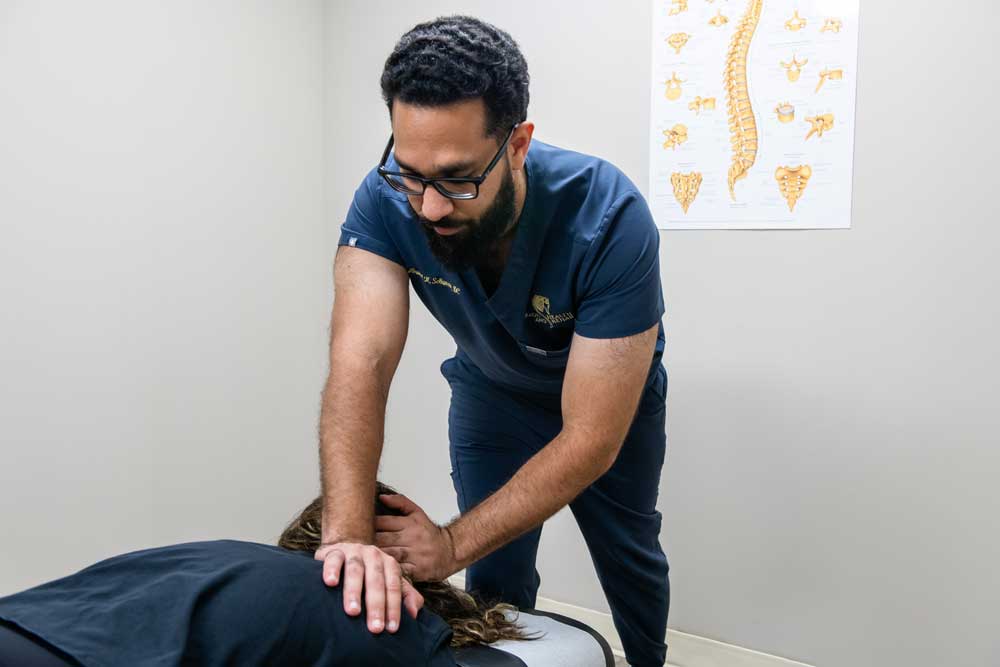
- Chiropractic Adjustments
- Cupping Therapy
- Dry Needling with E-Stim
- Therapeutic Exercises
- Shockwave Therapy
- TECAR Therapy
- Spinal Decompression
There is no universal treatment schedule that works for everyone.
The recommended frequency of care depends on the patient’s condition, response to treatment, and personal goals.
As your symptoms, function, and tolerance change, the doctor can use that information to determine whether the plan should continue as written or be adjusted.
Your First Treatment
When it is safe and appropriate, treatment typically begins during the first visit so we can begin to address the problem right away. The specific treatment provided will depend on your condition, examination findings, goals, and any identified contraindications.
The initial treatment is intended to be the beginning of your personalized treatment plan. The goal is to provide relief, be it temporary or long-lasting. This also gives the doctor useful information about how your body responds, which can help guide decisions at your next visit.
If additional imaging or specialist evaluation is needed first, treatment may be postponed or modified in order to prioritize your health and safety.
Before leaving, you will check out and schedule the recommended follow-up appointments. This continually allows the doctor to evaluate your response to treatment, track your progress, and make any necessary adjustments to your treatment plan.
What You May Feel Afterward
Every patient responds differently following an initial treatment or adjustment.
Some people notice improvement soon afterward, while others may experience temporary soreness, stiffness, or discomfort in the treated area.
Mild soreness can occur after spinal manipulation and is generally temporary. Your doctor will let you know what to expect based on the treatment you received and provide any applicable aftercare instructions.
We also encourage patients to stay hydrated following treatment and throughout their daily routine, especially in the Texas heat.
Through our partnership with LMNT, patients have access to a convenient and science-based electrolyte option that can help support their individual hydration needs.
If you experience symptoms that concern you, become severe, or do not improve as expected, contact the office for guidance rather than waiting until your next scheduled visit.
Your First Visit Is the Beginning of a Personalized Plan
Your first chiropractic visit should leave you with a clearer understanding of your condition, treatment options, and next steps.
From the initial conversation to your first treatment and follow-up plan, every part of the appointment helps us understand what you need.
Whether your goal is to reduce discomfort, return to work, or get back to your favorite activity, your care begins with understanding where you are now and where you want to go.
Ready to take the first step? Contact our office or request an appointment online to schedule your initial chiropractic visit.